
Magnetic iButton Readers & Probes
The iButton magnetic reader generally contains magnets inside, and it usually works with an iButton plus an iron ring. With an iron ring on the iButton, the iButton key can be adsorbed on the magnetic probe and the iButton information can be read.
iButtonReaders.com is a professional magnetic probe manufacturer in the world. The magnetic probes we produce have excellent performance and high cost performance. In addition, we compared the magnetic force of various manufacturers around the world. The performance of our model is the strongest, so our products have been highly recognized by customers. We can also customize the cable length and assemble various connectors, such as Molex, JST, Cvilux, HL, etc. Our quality is very reliable, and our products are constantly improved and perfected. They also undergo various tests before mass production.
Our models of magnetic iButton probes include CC9092M, CC9092M-M10, CC9092M-T, CC9092M-E, CC9092M-P, CC9094M.
All of the magnetic probes support all MG1990A iButtons(iButton with a ferrous/steel outer rings).
Model List
| Model | Metal Material | Plating | LED | Cable Length | Fastening | Compatible Keys |
|---|---|---|---|---|---|---|
Brass | Ni | -- | -- | M8 | ||
Brass | Ni | -- | -- | M10 | ||
Model Links


The magnetic iButton probes
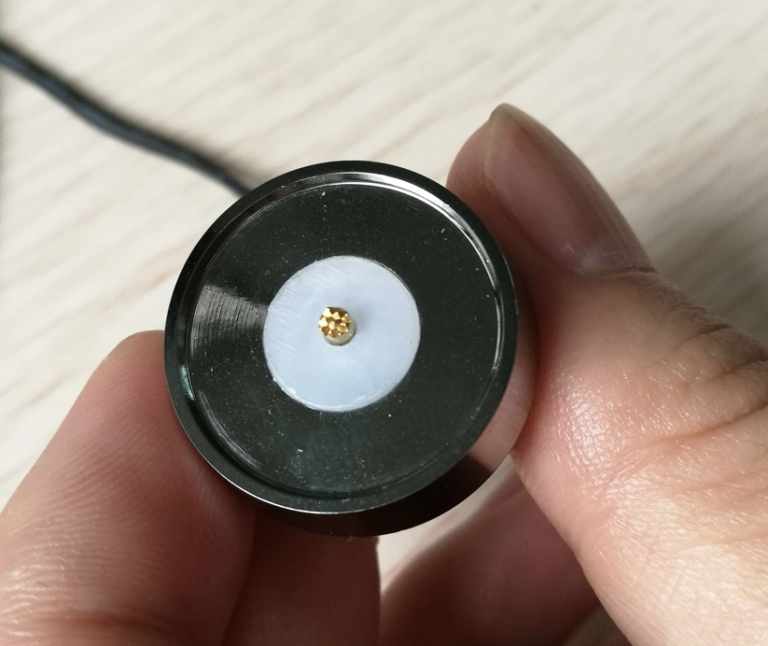
There are iButton magnetic readers produced by various manufacturers on the market, and the magnetic force of these magnetic probes varies. Some customers reported that the magnetic force was too small and the iButton key would fall off. We also took a sample for testing, and the result was that the magnetic force of this iButton magnetic reader was only about 200g, which was indeed too weak. If this kind of weak magnetic probe is installed on a vehicle-mounted system, such as a GPS device, it will cause the iButton key to fall off very easily. As long as the car encounters a little bump during driving, it will cause the iButton to fall off. The picture below shows a probe that we think has very low magnetic force. Even if it is used on EPOS, the magnetic force of this magnetic probe is not strong enough. For this iButton magnetic probe, the magnetic force needs to be improved.

Even if it is used on EPOS, the magnetic force of this magnetic probe is not strong enough. For this iButton magnetic probe, the magnetic force needs to be improved.
Improve the magnetic force of magnetic probe
The question is, how to improve or enhance the magnetic force of magnetic probe? We generally consider the following five aspects.
- First, from the design point of view, we should consider using bigger magnets. A larger magnet means a stronger magnetic performance. However, due to the limited space of iButton reader, the diameter of cylindrical magnet generally cannot exceed 5.5mm.
- The second is to put in as many magnets as possible, usually set in the number of 4, 6, or 8. Generally speaking, the space is limited, and 8 is unlikely. And it is not that the more magnets, the stronger the magnetism, because it is also necessary to consider that the magnets will have mutual repulsion if they are too close. It is generally believed that 4 or 6 are better choices, and the specific number to be selected should be considered from the perspective of efficiency and cost.
- The third point is to choose a magnet with stronger magnetic force. The stronger the magnetism of the magnet, the greater the ability to absorb the iButton.
- The fourth point is to choose the current processing technology to manufacture the brass body. Because this magnet is encapsulated in the probe body, there is a gap thickness between the magnet and the iButton key(the outer ferrous ring). During processing, the gap thickness requirement is relatively high. If the gap is too thick, the magnetic force will be too far away from the iron ring, the magnetic force will be weakened, and the magnetic performance will be affected. If the gap thickness is too thin, it is easy to cause the thin position to bulge, and the defective products will increase greatly.
- The fifth is to choose a spring probe with moderate elasticity. Generally speaking, the elasticity of the probe does not require a large push or pull force. We generally think that this elasticity is 100 grams (the spring is pressed to the bottom). For reading an iButton, the spring compression distance is about one millimeter, and the elastic force generated is about 20g.
The above five points need to be considered when designing and manufacturing magnetic probes.
Design of iButton’s outer ring
The design of magnetic iButton (our part number: MG1990A), you need to choose a good size iron ring. The inner diameter of the iron ring should match the outer diameter of the iButton to match the magnetic probe. It is not good to be too large or too small. If it is too small (thin), the magnetic attraction will be small. If it is too large, it cannot enter the magnetic probe and it is too heavy to carry. We usually think that the outer diameter is 19 mm, which is a universal standard. For the material of the iron ring, it is generally easy to choose iron (carbon steel). However, carbon steel is easy to rust and must be nickel-plated or chrome-plated. If the application scenario environment requirements are relatively high, you can also use magnetic stainless steel. According to our test results, the magnetic force of stainless steel is better than that of iron. One disadvantage of using stainless steel is that the cost will be higher.


Angle Handle
Another thing to consider is that the design of the iButton handle should be optimized. It cannot be designed with an angle, because the angle will increase the torque when it is hung on the magnetic probe. The iButton is easy to fall off the probe, so we considered designing it into a flat handle, or a straight handle.
The left picture is a magnetic iButton key with an angle holder. The right one is is with a flat handle.

Magnetic iButton with a flat handle
The wirings
Generally speaking, the wires of magnetic probes are led out separately. The positive wire is directly welded to the needle tail, and the negative wire is welded to the terminal. The negative terminal is fixed by tightening between two nuts.
The magnetic probe is a whole copper part, which is munufactuered as a whole. The internal space of the magnetic probe is very limited, and it is very difficult to install the sheathed wire inside. The common wiring method is shown in the figure below:
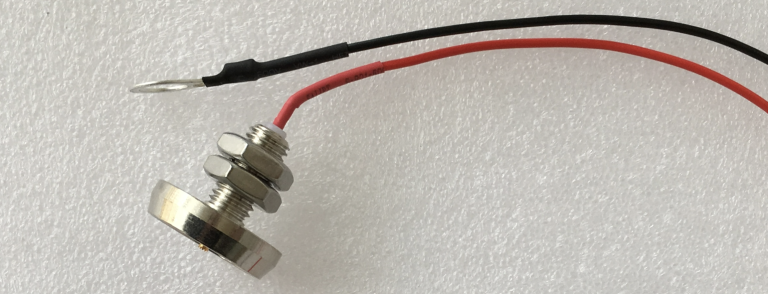
Seperate red wire
Seperate black wire
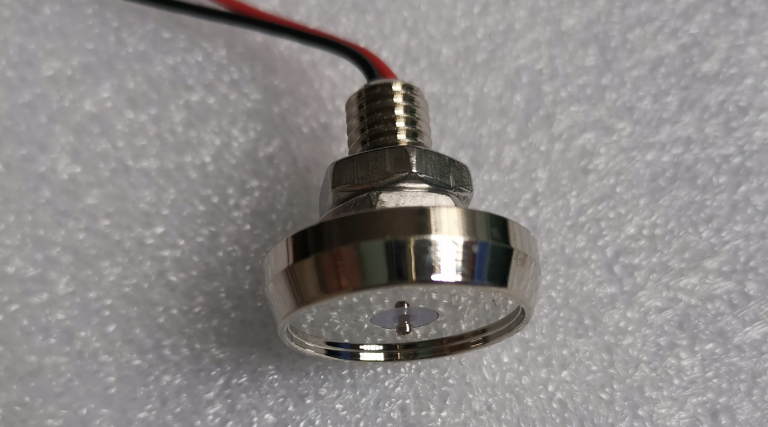
This wiring method is simple to install, efficient, and reliable, but there is a disadvantage that the negative terminal can only be installed after the probe is installed. Usually, this wiring method is not convenient to connect the connector.
Therefore, we launched another model CC9092M-E(E stands for Elegant), which directly leads two wires from the tail of the probe. Since this model requires more accessories and has lower assembly efficiency, the price will be higher. The advantage of this installation method is that it can be connected to an external connector and the probe installation method is simple. Since the two wires are separated separately, it is not convenient to make this wire too long. It is not like a sheathed wire, which can be cut to any length.
Considering the balance between wiring method and cost, we also have a wiring method that directly installs a needle at the tail and then welds the wire directly to the needle. If this application does not require high firmness, it can be considered. In fact, this installation is also very firm, if it is not broken manually. But the wires look a little uncomfortable and asymmetrical.
Materials and the Pogo pins in the center
Regarding materials and electroplating, the magnetic probe is processed as a whole, so the material selected is generally brass for lathe processing. After the copper parts are processed, they usually need to be electroplated, usually nickel-plated, and chrome-plated in special cases.
For the selection of the material of the spin pin, it is even more important. Because the reliability of the probe is a key factor in determining the service life of the probe. Usually we choose very good quality spring pins. Generally, the material of these pins are brass gold-plated, and the service life is more than tens of thousands of times. For the nuts for installation and fixing, we use 304 stainless steel nuts.

Packaging
Usually a probe and installation accessories are packed separately in a small bag, and then 100 pieces in a pack.
Production pictures


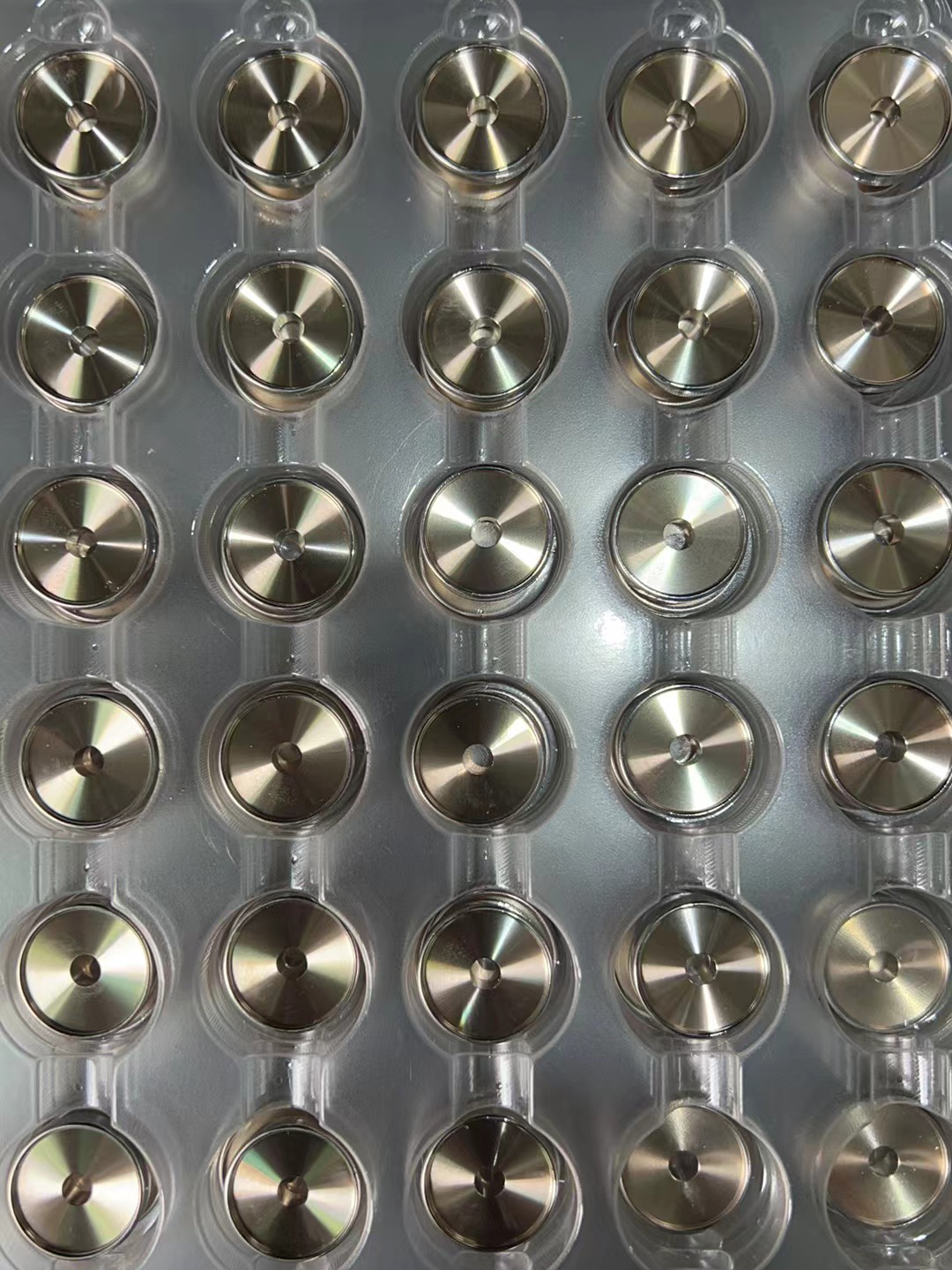
The magnetic probes we manufacture
iButtonReaders.com is a professional magnetic probe manufacturer in the world. The magnetic probes we produce have excellent performance and high-cost performance. In addition, we compared the magnetic force of various manufacturers around the world. The performance of our model is the strongest, so our products have been highly recognized by customers. We can also customize the cable length and assemble various connectors, such as Molex, JST, Cvilux, HL, etc. Our quality is very reliable, and our products are constantly improved and perfected. They also undergo various tests before mass production.